There are six species of deer currently living wild in the UK. Of these six, only two are truly native species, with the other four being introduced by man within the last thousand years.
RED DEER

Red Deer stag with large antlers. The velvet skin covering new antler growth is falling off, revealing the hard antler within
Red Deer (Cervus elaphus) are one of the two native species, and are found across most of Europe, as well as western and central Asia, as well as being the only deer species found in Africa (living in the Atlas Mountains). They have also been introduced to many other parts of the world, including North and South America, Australia and New Zealand, being used as a source of Venison in many countries.
FACTFILE
- Name: Red Deer (Cervus elaphus) – Males are Stags, Females are Hinds
- Size: Males range between 107-137cm at the shoulder, and females 107-122cm
- Weight: 90-190kg for males, and 63-120kg for females
- Lifespan: Up to 18 years
- Features: Large antlers with upto 16 tines, reddish brown to brown coats in summer, brown to grey in winter. No spots.
- Habitat: Woodlands and forests, open moors and hills
- Diet: Grasses and dwarf shrubs (e.g. heather, bilberry), and sometimes woody brows
- Mating habits: Rutting season is September to November. Dominant stags secure exclusive mating rights over females. Single calfs are born after an eight-month gestation
ROE DEER
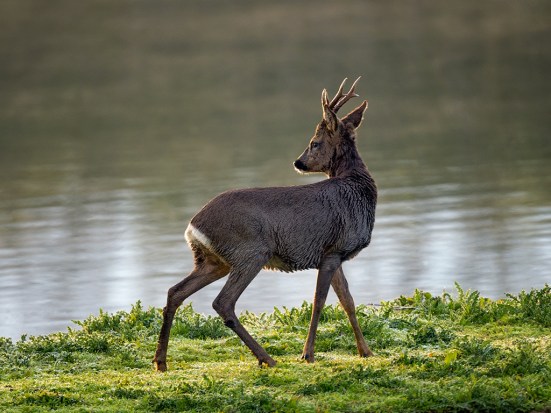
The Roe Deer Buck is much smaller than its Red cousin, with a characteristic white rump
European roe deer (Capreolus capreolus) are the second native species, again found across most of Europe, from Scandinavia to the Mediterranean and the Caucasus Mountains. There are no Roe Deer in Ireland, and an attempt in the 1870’s to introduce them failed after 50 years. Like Red deer, they have also been intorduced to other countries by humans, notably Australia and Micronesia, where they are hunted for meat. They are also found in the exclusion zone surrounding Chernobyl. Bambi, in the original book, was a Roe Deer.
FACTFILE
- Name: Roe Deer (Capreolus capreolus) – Males are Bucks, Females are Does
- Size: Males range between 60-75cm at the shoulder, and females slightly less.
- Weight: 10-35kg for males, females slightly less
- Lifespan: Up to 10 years
- Features: Small, rough antlers with up to three tines, reddish brown summer coats, and grey, pale brown or black in winter. Fawns have white spots
- Habitat: Woods and forests primarily, occasionally grasslands
- Diet: Grasses, leaves, young shoots and berries.
- Mating habits: Rutting season is July and August. Males attract mates by chasing females, and using their antlers to stir up foliage. Females lure males to their own territory before mating. After a 10-month gestation period, typically two fawns are born, one of each sex.
FALLOW DEER
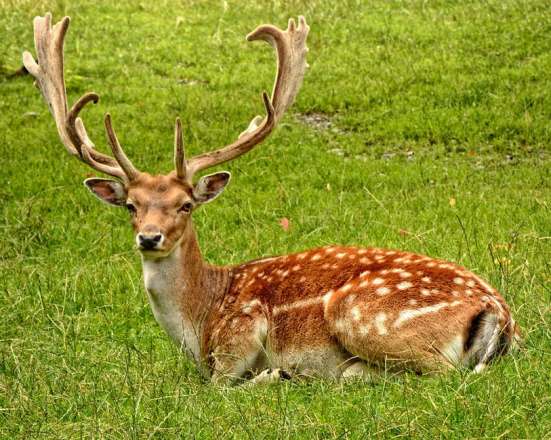
Fallow deer (Dama dama) are a species native to western Eurasia, but they have been successfully introduced to many parts of the globe, including parts of South and North America, South and North Africa, Australia, New Zealand, and the Carribean. The Romans spread fallow deer across Europe, and brought them to Britain, but they died out. The Normans later reintroduced them and they are now widespread.
FACTFILE
- Name: Fallow deer (Dama dama) – Males are Bucks, Females are Does
- Size: Between 84-94cm at the shoulder for males, and 73-91cm for females.
- Weight: 46-94kg for males, 35-56kg for females.
- Lifespan: Up to 16 years
- Features: Large palmate antlers (up to 70cm), typically tan/fawn coloured coat with with white spots in summer, grey in winter. There are three less common varieties -The Menil is paler and has visible spots year round, The Melanistic variety is almost entirely black, and the white variety can be white to sandy coloured.
- Habitat: Woodland and agricultural land
- Diet: Grasses primarily, plus tree and shrub shoots
- Mating habits: Like Red and Roe deer, males rut to gain mating rights, however in low density areas males may avoid this and simply seek out females. A single fawn is born after a 7.5 month gestation.
The final three species of deer present in the UK were all introduced in the 19th and 20th centuries, and therefore have no real archaeological presence. Their antlers are also not used for crafting, and so they are mentioned below for completeness, and because deer are brilliant!
SIKA DEER
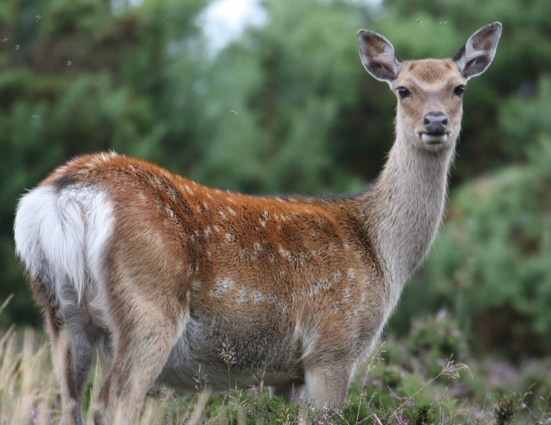
Female Sika Deer
The Sika deer (Cervus nippon) is native to East Asia, and is especially abundant in Japan. They were introduced into Britain in 1860, and it is possible that all wild living Sika in the UK come from one stag and three hinds introduced to Viscount Powerscourt’s deer park at Enniskerry, Ireland. They have also been brought to Western and Central Europe, the eastern United States, and New Zealand.
FACT FILE
- Name: Sika deer (Cervus nippon) – Males are Stags, Females are Hinds
- Size: Between 70-95cm at the shoulder for males, and 50-90cm for females.
- Weight: 40-70kg for males,30-45kg for females.
- Lifespan: Up to 18 years
- Features: Similar antlers to Red Deer, but with only 8 tines. They are similar in coat to fallow deer, but darker, with a dark dorsal stripe.
- Habitat: Temperate and subtropical forests, woodlands and heaths
- Diet: Grasses and dwarf shrubs, especially heather in Britain
- Mating habits: The rutting season for Sika Deer is September to November, but unusually, males may form a group (or lek) to search for females. A single fawn is born after a 7.5 month gestation.
MUNTJAC DEER
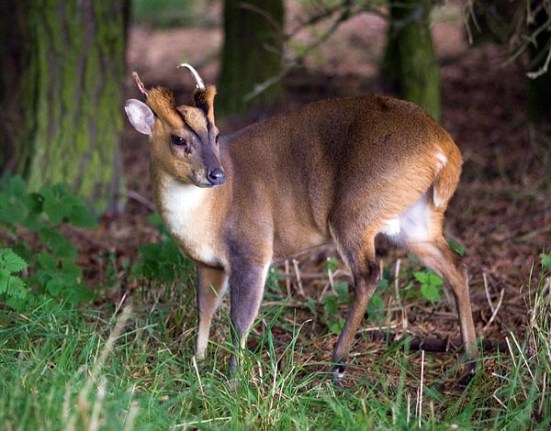
Reeves’s muntjac deer (Muntiacus reevesi) are a small species, native to Southeast China, parts of Japan, and Taiwan. They were named for John Reeves, Assistant Inspector of Tea for the British East India Company in 1812. They have since been introduced to Belgium, the Netherlands, and the UK. The first deer in England were brought from China to Woburn Park, Bedfordshire in the early 20th century.
FACT FILE
- Name: Reeves’s muntjac deer (Muntiacus reevesi) – Males are Bucks, Females are Does
- Size: Between 44-52cm at the shoulder for males, and 43-52cm for females. Unlike the other species, Muntjac deer and Chinese Water Deer attain the same size regardless of sex
- Weight: 10-18kg for males, 9-16kg for females.
- Lifespan: Up to 16 years for bucks, 19 for does, but this is exceptional
- Features: Bucks have small (10cm) unbranched antlers growing from long pedicles in the skulls. They also have large, primitive, visible canines (tusks). They are russet brown in summer and grey/brown in winter, with dark facial markings
- Habitat: Deciduous or Corniferous forests, plus scrub and overgrown urban areas
- Diet: Grasses and browse,they also like flowers, nuts, berries and fungi
- Mating habits: Unlike other deer, they have no breeding season (rut) but instead can breed all year, with a gestation period of seven months. Does can theoretically breed again just days after giving birth
CHINESE WATER DEER
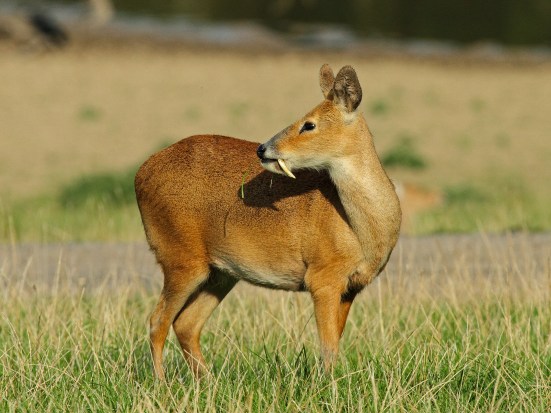
Chinese Water Deer (Hydropotes inermis inermis) are small deer native to China (surprisingly) and Korea. They have been introduced into Britain, France and the United States, with the first examples kept at London Zoo from 1873.
FACT FILE
- Name: Chinese Water Deer (Hydropotes inermis inermis) – Males are Bucks, Females are Does
- Size: 50-55kg for both males and females
- Weight: 11-18kg for both males and females
- Lifespan: Up to 6 years
- Features: Unlike all the other deer, they do not possess antlers, but like the Muntjac, they do have large primitive tusks. They are russet brown in summer and grey brown in winter, with rounded ‘teddy-bear’ ears
- Habitat: Reed beds, woodlands, fields and river shores.
- Diet: They are selective eaters, choosing nutritious plants and herbs, but will eat grasses if necessary
- Mating habits: The rutting season is November to December, mating pairs remaining together until April. After a seven month gestation up to six fawns are born (more commonly 3-4), however up to 40% of these tend to die within four weeks
 Guerilla Archaeology